Industrial client · design, manufacturing & software
Camera-based LED detection for a HIL test bench
Light guides and a camera capture the LEDs of the device under test – immune to stray light, isolated and cheaper than 25 fast inputs. Integrated in one day.
- HIL test bench
- Light guides
- Image processing
- 3D printing
- Design by contract
- Industrial camera
- Galvanic isolation
- Digital inputs
Challenge
Control units and operator panels often show their status via LEDs. For automated testing on a HIL test bench, these indicators had to be evaluated reliably – not just “on” or “off”, but also dimmed and flashing. At the same time, the test bench needed to inject signals via digital inputs.
Approach
Hardware
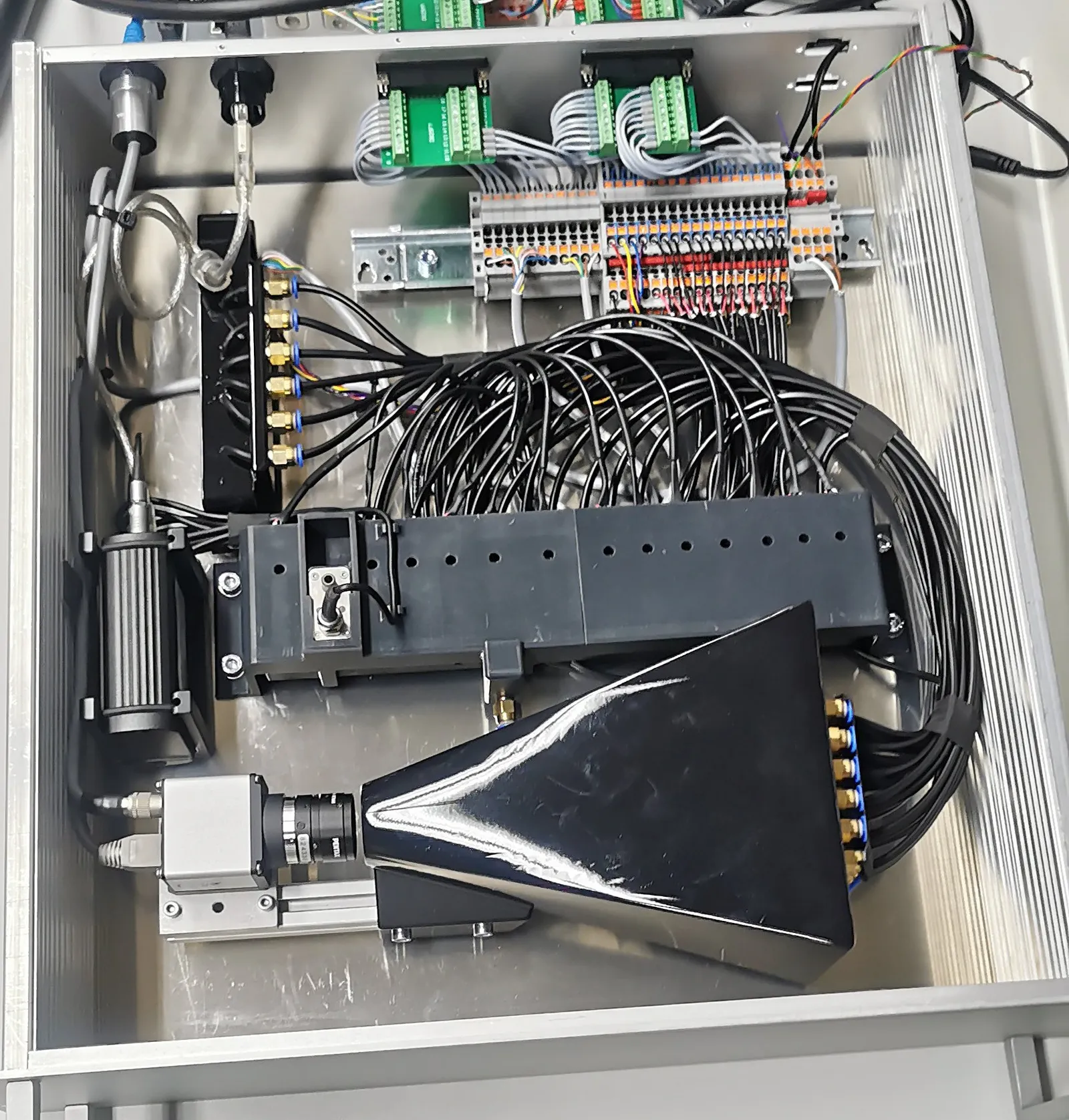
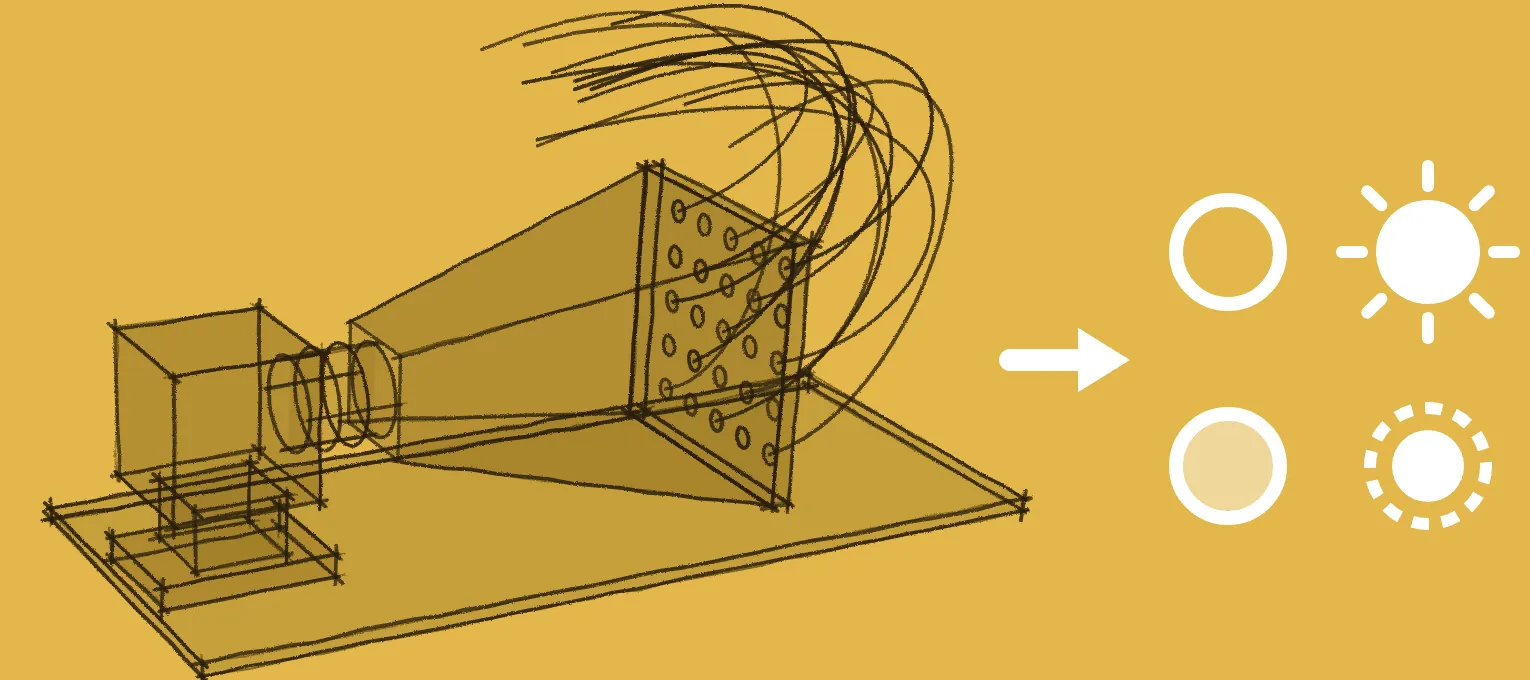
- Light guides carry the light of each LED from the device under test into the 19-inch rack module
- A tube in front of the camera arranges the ends of the light guides as a matrix and shields them from ambient light
- An industrial camera captures the matrix and thus the LEDs of the device under test
- Signal injection via digital inputs
Design and manufacturing
- All components of the module designed in-house
- Manufactured by 3D printing, also in-house
Software
- Comprehensive evaluation software that analyses the camera images and detects the LED states: off, on, dimmed and flashing
- State data passed to the test framework via a defined interface – image analysis stays entirely within the module
- Interface specified strictly according to design by contract in agreement with the client: which data is delivered, in which form and under which conditions is binding for both sides
Outcome
- Immune to stray light: the tube shields the light guides from ambient light, so detection stays reliable regardless of the lighting at the test bench.
- Cost-effective: in this project, the camera method saved 25 fast inputs.
- Full galvanic isolation: the light guides transmit only light – the electrical potentials of the device under test and the evaluation remain completely separate.
- Delivered quickly: because we designed all components ourselves and 3D-printed them in-house, the client received the finished solution within a short time.
- Integrated in one day: because the interface had been clearly agreed in advance, system integration was completed within a single day. The client’s test framework receives ready-to-use LED states and does not have to perform any image analysis itself.
Why design by contract?
With design by contract, both sides define up front what an interface requires and what it guarantees. Deviations surface early and integration becomes predictable – instead of improvising at the test bench.
More about our HIL test benches, test automation and mechanical design.
From the project
Click a photo to enlarge it.
-
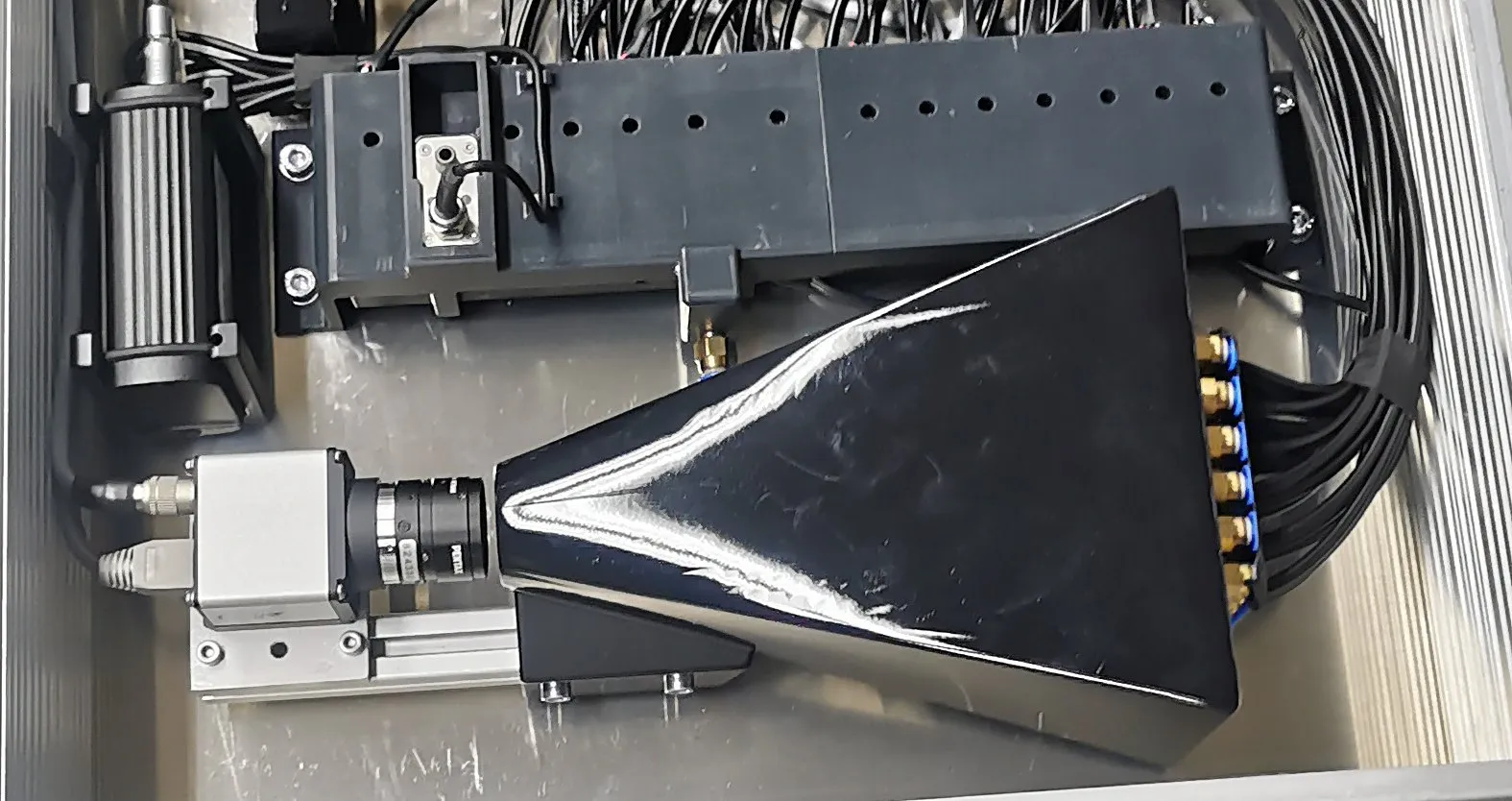
Camera and tube: the tube arranges the light guides as a matrix and shields them from ambient light -
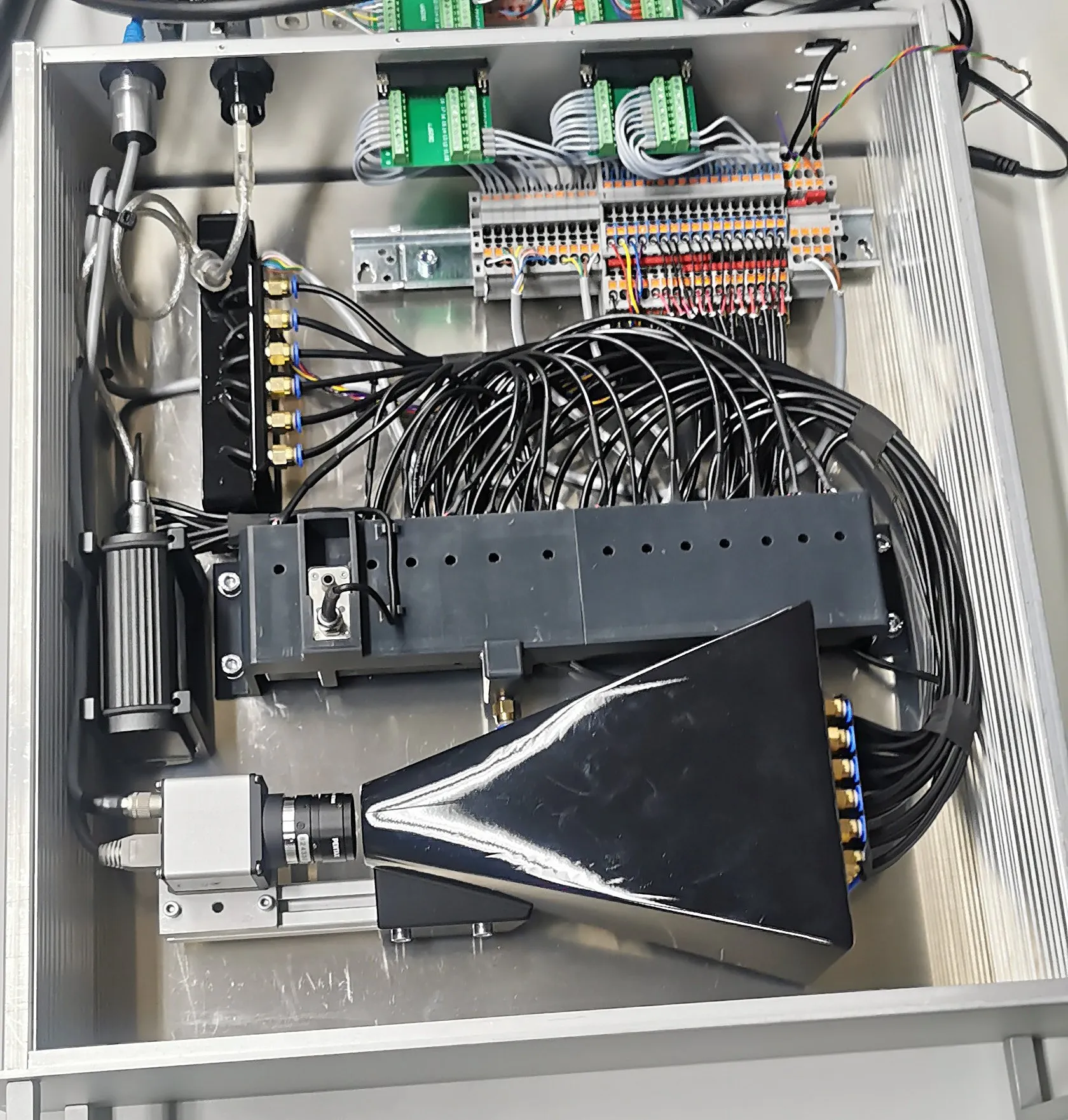
Overview of the module: light guides, tube and camera (bottom), terminals for the signal interface (top)